Initiative
The Oak Tree Rule
A proposed Permitted Development right that could unlock onshore wind turbines up to 50kW for commercial properties across England.
A planning shake-up for onshore wind
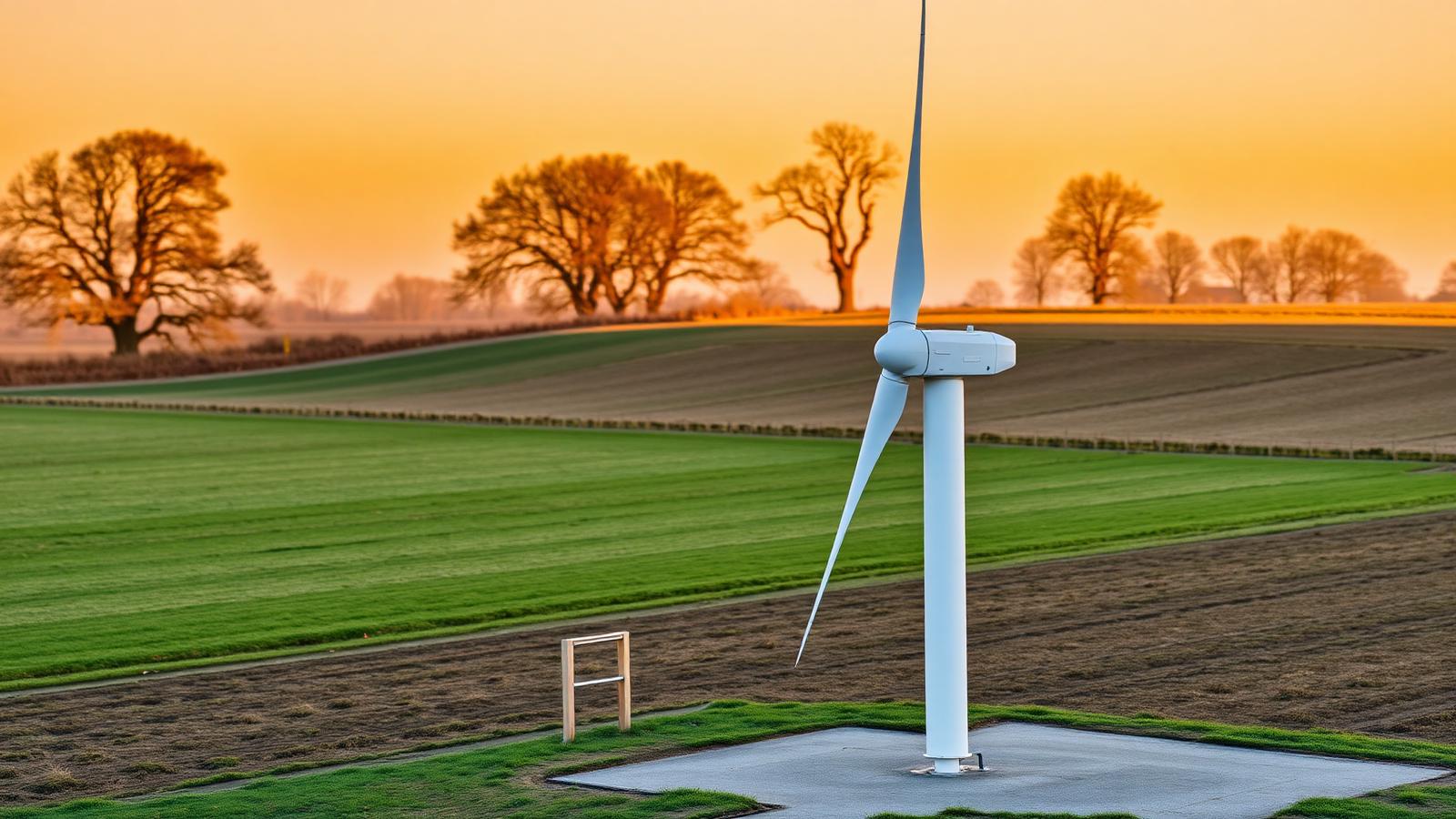
In March 2026 the UK Government opened a consultation on extending Permitted Development (PD) rights to onshore wind turbines in England — informally nicknamed the "Oak Tree Rule" because the tip-height threshold of a typical turbine up to 50kW sits broadly in line with a mature oak.
The proposals would allow eligible commercial properties to install a single onshore wind turbine up to 50kW without applying for full planning permission — instead following a streamlined Prior Approval process. For owners and occupiers facing volatile energy prices and net-zero targets, it's potentially one of the most significant on-site generation reforms of the decade.
Oak Tree Rule Policy Tracker
Consultation closed — Government response awaited
Last checked: 13 October 2026 — GOV.UK still shows "We are analysing your feedback"
We track the proposed non-domestic wind turbine Permitted Development changes stage by stage and publish only what the Government has formally confirmed. Stages still to come are clearly labelled.
- Step 1
Government proposal announced
18 March 2026
DESNZ published its consultation on Permitted Development rights for onshore wind turbines in England.
- Step 2
Consultation opened
18 March 2026
The consultation opened at 10am on 18 March 2026.
- Step 3
Consultation closed
10 June 2026
The consultation closed at 11:59pm on 10 June 2026. Submissions are now being analysed.
- Step 4
Government response
Awaiting publication
Awaiting Government confirmation
Awaiting Government confirmation
- Step 5
Final legislation
Awaiting publication
Awaiting Government confirmation
Awaiting Government confirmation
- Step 6
Effective date
To be confirmed
Awaiting Government confirmation
Awaiting Government confirmation
What we're waiting to find out
The consultation proposes a framework; the final rules will decide the detail. Nothing below should be treated as confirmed until the Government's response is published.
Maximum turbine capacity
The consultation proposes a single wind turbine of up to 50kW per site. The final capacity limit is not yet confirmed.
Maximum turbine height
Proposals reference the tip-height of a mature oak tree as the guiding principle. No final height limit has been published.
Boundary / setback requirements
Any required distances from site boundaries, buildings or dwellings have not been confirmed.
Noise requirements
DESNZ published new national noise guidance in June 2026, but the specific noise limits that would apply under the new PD right are not confirmed.
Prior approval process
A streamlined Prior Approval route with defined statutory timescales is proposed.
Protected / designated land exclusions
How sites in or near National Parks, AONBs, conservation areas and other designations would be treated is not confirmed.
Grid / DNO requirements
Any requirements around grid connection, export or DNO notification have not been confirmed.
Certification requirements
Whether turbines must meet specific technical or certification standards has not been confirmed.
Get the Oak Tree Rule update
Leave your email and we'll tell you when Government publishes the final rules — without filling your inbox with marketing.
Have a site ready?
You don't necessarily need to wait. We can undertake the technical feasibility work now so that you understand whether the site has potential before the final rules are published.
Assess a SiteWhat's being proposed
One turbine up to 50kW per site
A single onshore wind turbine up to 50kW on commercial property, with strict size, siting and noise limits.
Commercial settings
Aimed at industrial estates, business parks, agricultural buildings and similar commercial settings.
Prior Approval, not full planning
Local authorities would assess specific impacts (transport, noise, design, heritage) within a fixed timeframe.
The route to approval under PD
If the proposals come into force, the path from idea to spinning blades looks like this. Each step has a defined statutory clock — meaning predictable timelines for owners and investors.
- 01
Site eligibility check
Confirm the property type, distance from dwellings, designations (AONB, conservation areas, Listed Buildings) and grid position.
- 02
Wind & yield assessment
Desk-based wind resource analysis to confirm the site is commercially viable before any spend.
- 03
Pre-application & community engagement
Early engagement with the LPA and neighbours to identify and design out objections.
- 04
Prior Approval submission
Submit drawings, noise assessment, transport details, design and heritage statements to the LPA.
- 05
Statutory determination period
The LPA must decide within the prescribed PD window — failure to determine can result in deemed consent.
- 06
Discharge of conditions
Address any conditions (e.g. construction management, noise monitoring) and obtain final sign-off.
- 07
Build, commission, generate
Installation, DNO connection, commissioning and handover to the operations team.
How we help when it becomes legislation
We're already preparing site files for commercial property owners so they're ready to submit on day one. Our service spans technical, regulatory and commercial workstreams.
Common questions
Is the Oak Tree Rule already law?
Not yet. It is a Government consultation on extending Permitted Development for onshore wind in England. We'll update this page when the policy progresses.
Will it apply to my property?
Eligibility is expected to depend on property type, location, designations and proximity to dwellings. We can pre-screen any site against the proposed criteria.
How big is the turbine?
Proposals focus on single turbines up to 50kW suitable for commercial settings — broadly in the height range of a mature oak tree, hence the nickname.
What happens if it isn't passed?
Sites can still progress through the standard planning route. The pre-work we do (eligibility, yield, design) remains directly reusable.
Get ahead of the Oak Tree Rule
Register your interest and we'll add your site to our pre-screening pipeline.